
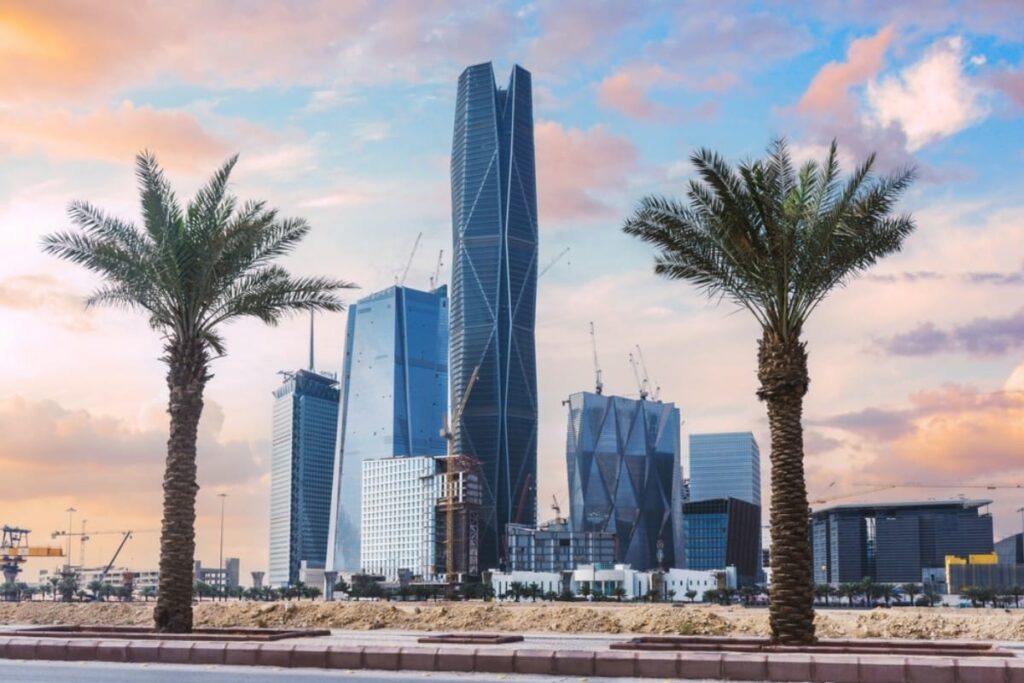
Riyadh is not simply Saudi Arabia’s capital. In 2026 it is one of the most commercially active cities on earth, the seat of the world’s fastest-growing G20 startup ecosystem, the host of more than 700 multinational regional headquarters, the epicentre of a construction programme worth trillions of riyals, and a market where foreign entrepreneurs and investors can now own a business outright, without a local partner, across most commercial activities.
How Vision 2030 Is Creating Business Opportunities in Riyadh for Foreigners
The business opportunities in Riyadh for foreigners have never been more accessible, more diverse, or more commercially consequential than they are right now. The reforms that Vision 2030 has delivered since 2016, from the abolition of mandatory local partner requirements to the streamlining of MISA investment registration, the creation of Special Economic Zones, and the opening of sector after sector to full foreign ownership, have collectively transformed Riyadh from a market where foreign participation required navigating around structural constraints into one where it is actively invited, supported, and increasingly necessary to the city’s own growth ambitions.
This guide covers the business opportunities in Riyadh for foreigners that are most commercially compelling in 2026, the sectors where demand is most concentrated, the geographic and regulatory frameworks that shape where and how a foreign business can operate, and what the practical steps look like for an investor or entrepreneur who is ready to move from evaluating the opportunity to capturing it.
MFD Services supports foreign investors and entrepreneurs entering Riyadh through its investment and corporate advisory practice, managing the full market entry sequence from structure selection through to an operational, compliant business.
Table of Contents
- Why Riyadh Has Become One of the World’s Most Significant Business Cities
- These opportunities: The Sector Landscape
- Technology and Fintech: The Fastest-Growing Opportunity Category
- Professional Services: The Demand That Vision 2030 Has Created
- Construction and Giga-Project Supply Chain Opportunities
- Healthcare: A Market Being Transformed by Privatisation
- Education, Training, and Human Capital Development
- Retail, Hospitality, and the Entertainment Economy
- Manufacturing and Industrial Opportunities in Riyadh
- The Regional Headquarters Opportunity and What It Demands
- Key Districts and Economic Zones Shaping Where Riyadh Business Happens
- Ownership Rights and What Foreigners Can Actually Own in Riyadh
- The Step-by-Step Entry Process for Foreign Business in Riyadh
- Tax and Compliance Obligations That Every Foreign Business Faces
- How MFD Services Supports Foreign Investors Entering Riyadh
- Frequently Asked Questions
Why Riyadh Has Become One of the World’s Most Significant Business Cities
What Specifically Makes Riyadh the Right City at the Right Time for Foreign Business
Business opportunities in Riyadh for foreigners exist within a commercial context that has changed more rapidly over the past eight years than almost any other major global city. Understanding that context, not just the headline statistics but the structural forces that produced them, is what allows an investor to identify the opportunities that are most durable and most aligned with the city’s actual development trajectory.
The Economic Transformation Driving Business Opportunities in Riyadh
Riyadh jumped 60 positions in a single year to rank 23rd globally as a startup ecosystem in the 2025 Global Startup Ecosystem Report. Saudi Arabia’s non-oil GDP reached 55.6% of total economic output in 2025, up from 45.4% when Vision 2030 launched in 2016. The construction market alone generated USD 196 billion in contract awards in 2025. LEAP 2025 generated $14.9 billion in deals and announcements in a single event. And venture capital deployed into Saudi startups hit $4.2 billion in 2025, a 25-fold increase from 2018.
Behind these numbers is a city that has made a deliberate, sustained, and increasingly successful effort to diversify its economic base away from dependence on oil, to establish Riyadh as the unambiguous commercial capital of the Arab world, and to attract the international business community that deepens that position. This market opening exists because Riyadh has decided it needs what foreign businesses bring: capital, technical expertise, technology, management capability, and the commercial credibility that comes with international participation.
Business Opportunities in Riyadh for Foreigners: The Sector Landscape
Which Sectors Are Generating the Most Concentrated Business Opportunity
The commercial opportunities here are not uniformly distributed across all commercial categories. They are concentrated in specific sectors where Saudi Arabia has made deliberate structural decisions to invite foreign participation as part of its diversification strategy. Understanding where these concentrations are most pronounced is the starting point for any investor evaluating where to focus.
Vision 2030 has explicitly identified twelve priority sectors for economic diversification: financial services, tourism and hospitality, entertainment, sports, advanced manufacturing, mining, technology and digital, healthcare, logistics, real estate and housing, renewable energy, and retail. Business opportunities in Riyadh for foreigners exist across all of these, but the depth of the opportunity varies by sector, by the existing competitive landscape, and by how much of the available demand is already being served by established domestic players versus how much remains genuinely open to new entrants.
The sections that follow cover the sectors where the opportunity is most concentrated, most accessible to a foreign entrant in 2026, and most likely to generate durable commercial returns rather than a brief window before the market matures.
Technology and Fintech: The Fastest-Growing Opportunity Category
What Specifically Makes Technology One of the Best Riyadh’s foreign business opportunities
Technology is the category where business opportunities in Riyadh for foreigners are growing fastest, supported by a combination of genuine domestic demand, government investment in digital infrastructure, and a regulatory environment that has been explicitly designed to accelerate technology adoption.
Saudi Arabia ranked first among G20 nations for startup ecosystem growth in May 2026, third globally in the Stanford AI Index for both AI model development and AI job growth rates, and first in the region for AI technologies. LEAP 2025, the technology investment conference held in Riyadh, welcomed over 1,900 investors with a combined AUM of over $22 trillion. These are not manufactured statistics. They describe a commercial ecosystem with genuine depth and momentum.
Business Opportunities in Riyadh for Foreign Technology Companies
Fintech specifically has produced four unicorns in Saudi Arabia: Tamara, Tabby, STC Pay, and Foodics. SAMA’s regulatory sandbox and open banking licensing that went live in early 2026 have created a fintech regulatory environment that is actively supportive of new entrants. Enterprise software and ERP represent a massive addressable market driven by ZATCA’s mandatory e-invoicing requirements and the digitalisation of government procurement. Cybersecurity is a national priority with significant public sector budgets. Cloud infrastructure, AI applications, and digital health technology are all categories where Riyadh’s investment is creating genuine procurement demand for qualified foreign technology businesses.
For foreign technology businesses evaluating business opportunities in Riyadh, the Cloud Computing Special Economic Zone offers a reduced corporate income tax rate of 5% for qualifying cloud and technology activities, compared to the standard 20% on the mainland, which materially changes the economics of establishing a Riyadh-based technology operation.
MFD Services supports technology businesses with ZATCA integration and the broader digital transformation infrastructure that technology businesses need from day one of operations.
Professional Services: The Demand That Vision 2030 Has Created
Why Is Professional Services One of the Most Consistently Strong Opportunities
Business opportunities in Riyadh for foreigners in professional services are among the most durable because they are driven by structural demand that grows with the overall economy rather than depending on a single project cycle or investment programme.
Over 700 multinational companies have established regional headquarters in Riyadh, each of which requires accounting, legal, tax, HR, compliance, and management advisory services from qualified professionals. Every one of the giga-projects under active development, from NEOM to Red Sea Global to Qiddiya and Diriyah, requires engineering consultancy, project management, quantity surveying, and specialist technical advisory. Every new Saudi company formed as domestic entrepreneurs responding to Vision 2030’s commercial stimulus requires financial advisory, audit coordination, and strategic advisory.
Why Global Professional Services Firms Are Expanding
The UK-GCC Free Trade Agreement concluded on 20 May 2026 explicitly recognises UK legal qualifications in Saudi Arabia, creating a new pathway for UK professional services firms to access the Saudi market on a more structured basis. Financial services firms gain access to GCC markets without requiring full physical presence under the agreement’s provisions.
For foreign professionals and professional services firms evaluating business opportunities in Riyadh for foreigners, the Regional Headquarters Program offers particularly compelling terms: a zero percent corporate income tax rate for thirty years on qualifying RHQ activities and zero percent withholding tax on dividend payments. For genuine regional headquarters with fifteen or more full-time employees including three C-level executives, this is an extraordinary tax position relative to any alternative jurisdiction.
Construction and Giga-Project Supply Chain Opportunities
What Opportunities Exist in Riyadh’s Construction and Infrastructure Market
The scale of construction activity in Saudi Arabia is without historical precedent. Contract awards reached USD 196 billion in 2025, up 20% year on year. The pipeline for the next eight years carries SAR 8 trillion in projects. NEOM alone is a USD 500 billion undertaking. Riyadh is simultaneously undergoing its own transformation as a city, with KAFD, the King Salman District, and extensive infrastructure expansion all running in parallel.
The opportunities available in construction and its supply chain are concentrated in three areas. Specialist technical services including structural engineering, MEP design and installation, environmental management, and project management attract international expertise that the domestic supply base cannot fully provide at the required quality and scale. Building materials and construction technology where Saudi Arabia’s manufacturing base is not yet deep enough to fully substitute imported product supply. And professional construction-adjacent services including quantity surveying, contract management, and construction finance advisory where international expertise adds genuine value to projects of this complexity.
Foreign construction businesses pursuing these business opportunities in Riyadh will find that Aramco and SABIC vendor qualification, Red Sea Global vendor registration, and Etimad government procurement qualification all require a Saudi commercial registration and the associated compliance documentation before any significant project participation is possible. Building this regulatory standing early, before a specific tender opportunity triggers urgency, gives foreign construction businesses access to the full opportunity rather than only the portion they can reach through subcontracting relationships.
Healthcare: A Market Being Transformed by Privatisation
What Are the Healthcare Business Opportunities in Riyadh for Foreign Investors
Saudi Arabia’s healthcare system is undergoing a systematic transformation from government provision toward a mixed public-private model, and the privatisation of healthcare delivery is creating this investment opportunity across hospital operations, specialty clinics, medical technology, pharmaceuticals, and healthcare IT.
Healthcare spending in Saudi Arabia reached approximately SAR 211 billion in 2025, driven by a population of over 35 million, a disease burden profile shifting toward lifestyle-related chronic conditions, and a government commitment to achieving 35% private sector healthcare provision by 2030, up from a historically much lower baseline. Foreign healthcare operators and technology businesses have access to a market that is structurally required to grow its private sector participation, with regulatory frameworks designed to facilitate the entry of qualified international operators.
The SFDA approval process for medical devices and pharmaceuticals adds regulatory complexity that is specific to healthcare business opportunities in Riyadh for foreigners in the product supply category. Healthcare facility licensing requires Ministry of Health approval alongside the standard MISA investment registration. These additional regulatory layers make early engagement with a market advisory function, rather than relying purely on the standard formation process, a practical necessity for healthcare entrants.
Education, Training, and Human Capital Development
Why Is Education One of the Strongest Structural Opportunities
Business opportunities in Riyadh for foreigners in education and training are driven by one of the most consequential dimensions of Vision 2030: Saudi Arabia needs to develop its own human capital at the speed and quality that its economic transformation requires, and the domestic education system as it existed before 2016 was not configured to deliver this.
Over 70% of Saudi citizens are under 35. The government’s Saudisation programme requires an increasing proportion of private sector jobs to be filled by Saudi nationals. And the skills demanded by the technology, healthcare, financial services, and professional service sectors that Vision 2030 is developing are, in many cases, not yet adequately supplied by the existing graduate pipeline.
Foreign education institutions, vocational training providers, e-learning platforms, professional development programmes, and corporate training organisations all find genuine demand in Riyadh from both the public sector, which is actively upgrading national human capital, and the private sector, which needs qualified Saudi national employees to meet Saudisation requirements and to build genuine operational capability.
International universities and training institutions entering Saudi Arabia require Ministry of Education approval in addition to the standard MISA licensing. Technology-enabled learning platforms face a more streamlined entry pathway where the standard MISA service category covers digital education delivery adequately for most platforms.
Retail, Hospitality, and the Entertainment Economy
What Has Changed for Retail and Entertainment Business Opportunities
Business opportunities in Riyadh for foreigners in retail, hospitality, and entertainment have expanded dramatically since the Vision 2030-era social reforms that opened entertainment and leisure sectors that were previously absent or severely restricted.
Saudi Arabia now hosts Formula One, Wrestlemania, international music concerts, cinema chains, professional sports leagues, and a hospitality and entertainment economy that literally did not exist in its current form before 2017. General Entertainment Authority licensing has created a formal, accessible framework for international entertainment and event businesses. The tourism ambition behind Red Sea Global, AMAALA, and Diriyah is generating hotel supply chain and hospitality operator demand that requires international partners with track records in luxury and sustainable hospitality.
For retail specifically, the Saudi market is one of the most significant consumer retail markets in the Arab world, with a young, digitally engaged consumer population and strong spending patterns in fashion, food and beverage, electronics, and lifestyle categories. International retail franchise and brand licensing represents established business opportunities in Riyadh for foreigners that have operated for decades, while direct retail entry has become more accessible since the removal of the local partner requirement.
Manufacturing and Industrial Opportunities in Riyadh
How Do Vision 2030’s Manufacturing Targets Create Business Opportunities
Business opportunities in Riyadh for foreigners in manufacturing sit within the broader national industrial programme that has added SAR 1,045 billion to Saudi non-oil GDP in 2025 and is targeting a manufacturing contribution to GDP of 20% by 2030, up from approximately 12% currently.
Riyadh’s specific contribution to this industrial programme is most visible in the Cloud Computing Special Economic Zone for technology manufacturing and services, the defence manufacturing cluster that has grown from 2 licensed manufacturers in 2017 to over 100 by mid-2025, and the pharmaceutical and medical equipment manufacturing that is being actively encouraged through SFDA’s local manufacturing incentive framework.
For foreign manufacturers, the Saudi Industrial Development Fund has approved net cumulative loans of SAR 246 billion and provides financing terms designed specifically to support industrial market entry. Local content mandatory purchasing lists totalling over 1,670 products create structurally protected demand for qualifying manufacturers. Business opportunities in Riyadh for foreigners in manufacturing are among the most incentive-rich of any category, with financing, protected procurement access, and in some cases Special Economic Zone tax advantages combining to create an entry proposition that compares favourably with alternative manufacturing destinations.
The Regional Headquarters Opportunity and What It Demands
What Does the Regional Headquarters Programme Offer Foreign Businesses
The Regional Headquarters Programme, managed by the Royal Commission for Riyadh City working alongside MISA, represents one of the most structured business opportunities in Riyadh for foreigners from a tax and commercial access perspective. Over 700 multinational companies have already established RHQs in Riyadh, exceeding the government’s original 2030 target years ahead of schedule.
For qualifying foreign businesses, the RHQ license provides zero percent corporate income tax for thirty years on eligible RHQ income, zero percent withholding tax on dividends and qualifying payments, unlimited visa allowances for key headquarters personnel, and a ten-year Saudization exemption. From January 2024, Saudi government procurement has generally required multinationals to hold an RHQ license to participate, making the program commercially essential for businesses pursuing significant public sector revenue.
Who Qualifies for the Regional Headquarters Program
The requirements are substantive: the company must genuinely perform regional management, strategic direction, or significant support functions from Riyadh, must maintain at least fifteen full-time employees including three C-level executives within one year of licensing, and must be part of a multinational group with presence in at least two countries outside Saudi Arabia and its home jurisdiction. These requirements are designed specifically to ensure RHQs function as genuine regional management centres rather than nominal presences.
MFD Services advises businesses on the financial compliance infrastructure that the RHQ licence requires, including ZATCA tax structuring and transfer pricing documentation.
Key Districts and Economic Zones Shaping Where Riyadh Business Happens
Which Riyadh Locations Matter Most for Foreign Business Entry
Choosing the right location is one of the most important decisions for foreign investors. Each business district offers distinct advantages depending on your industry, operational requirements, and long-term growth strategy.
- King Abdullah Financial District (KAFD): Riyadh’s premier financial hub, ideal for regional headquarters, financial institutions, and multinational corporations seeking a prestigious business address.
- Cloud Computing Special Economic Zone: Designed for technology companies, offering a reduced 5% corporate income tax for qualifying cloud and digital businesses.
- King Salman District: A rapidly expanding commercial district with modern offices, retail developments, and excellent transport connectivity for growing businesses.
- Sudair Industrial City and Industrial Clusters: A strategic choice for manufacturing and industrial companies requiring world-class infrastructure and supply chain access.
Selecting the most suitable location depends on your business model, target market, and regulatory requirements. Evaluating these factors early helps ensure a smoother market entry and supports long-term operational success.
Ownership Rights and What Foreigners Can Actually Own in Riyadh
What Does 100% Foreign Ownership Actually Mean in Practice for Businesses in Riyadh
Business opportunities in Riyadh for foreigners benefit from the significant ownership liberalisation that Vision 2030 has delivered. MISA investment registration permits 100% foreign ownership across most commercial sectors, removing the historical requirement for a Saudi partner to hold a majority stake.
This means a foreign individual or foreign company can establish a wholly owned Saudi LLC in Riyadh, own 100% of its shares, retain 100% of its profits, and control its operations entirely, for the vast majority of commercial activities. The exceptions are the sectors that carry strategic impact designations under the relevant Cabinet Resolution, including certain defence activities, petroleum exploration and production, and a limited set of other strategically sensitive categories.
The recently approved executive regulation for non-Saudi real estate ownership adds a further dimension to business opportunities in Riyadh for foreigners: foreign-owned businesses can now acquire real estate necessary for their business operations, including offices, warehouses, and staff accommodation, within the designated zones that the Real Estate General Authority has defined, adding an ownership layer to the commercial and operational presence that was previously only accessible through leasing.
The Step-by-Step Entry Process for Foreign Business in Riyadh
What Does the Practical Entry Pathway Actually Look Like for a Foreign Investor
Business opportunities in Riyadh for foreigners require a structured, correctly sequenced entry process to convert from commercial interest into an operational, compliant, bank-account-holding entity.
Trade name reservation through the Ministry of Commerce’s Maroof portal is the first step, establishing the company name before any other formation document is prepared. For non-GCC foreign investors, MISA investment registration is the prerequisite that enables the Ministry of Commerce to process the commercial registration application, and this requires the full documentation package including attested parent company documents, a board resolution, and audited financial statements for corporate investors.
Steps to Register Your Business
Commercial registration with the Ministry of Commerce following MISA approval formally constitutes the legal entity and issues the commercial registration number that every subsequent regulatory interaction references. Post-formation registrations, covering ZATCA for tax and VAT, GOSI for social insurance, and Chamber of Commerce membership, must be completed before trading begins.
Corporate bank account opening, typically the step that consumes the most calendar time at two to six weeks, should be initiated the moment the commercial registration is issued. For the full process from initial MISA application to an operational entity with a bank account, a realistic timeline for a well-prepared application is six to ten weeks.
MFD Services manages this full sequence for foreign investors, coordinating each stage to avoid the gaps between steps that extend timelines unnecessarily.
Tax and Compliance Obligations That Every Foreign Business Faces
What Tax Position Does a Foreign-Owned Business in Riyadh Actually Have
Business opportunities in Riyadh for foreigners exist within a tax framework that is straightforward at the headline level but requires specialist management in its operational detail.
Foreign-owned Saudi entities pay corporate income tax at 20% on taxable profits, administered by ZATCA. Saudi-owned entities pay Zakat at 2.5% on the Zakat base calculated from the balance sheet. Mixed-ownership entities pay both obligations proportionally according to the ownership split.
VAT at 15% applies to most business transactions, and ZATCA’s mandatory Fatoorah e-invoicing system requires every tax invoice to be transmitted to ZATCA’s platform in real time before it reaches the customer. This e-invoicing requirement applies from the first taxable invoice and cannot be deferred until the business is operational.
The Saudization programme under the Nitaqat framework requires private sector employers to maintain minimum percentages of Saudi national employees, with the required ratio varying by industry and company size. Building this into the hiring model from the first employee, rather than discovering a compliance gap when work visa applications trigger the issue, is the practical approach that avoids the operational constraint that a Nitaqat band downgrade creates.
MFD Services’ taxation advisory and HR and payroll practices manage these ongoing obligations for foreign-owned businesses across Riyadh and the Eastern Province.
How MFD Services Supports Foreign Investors Entering Riyadh
Business opportunities in Riyadh for foreigners are real, accessible, and growing. What converts the opportunity into a commercial outcome is executing the market entry correctly, building the compliance infrastructure from day one, and managing the ongoing obligations that determine whether the business can operate, scale, and access the commercial relationships that Riyadh’s market offers.
MFD Services supports foreign investors entering Riyadh with the full market entry sequence: business structure advisory to determine the right entity type for the specific sector and commercial model, MISA investment licensing, Articles of Association drafting, commercial registration, ZATCA enrollment, GOSI setup, and corporate bank account opening. This is coordinated alongside the ongoing financial advisory, accounting, audit, and HR compliance functions that a newly established foreign business needs from the first month of operation.
For investors pursuing business opportunities in Riyadh for foreigners through the Regional Headquarters route, the Special Economic Zone framework, or alongside Saudi Premium Residency applications, MFD manages the additional dimensions of these structures within the same integrated advisory relationship.
Contact MFD Services at +966 54 865 6146 or at info@mfd-services.com to discuss how to structure your entry into Riyadh’s market.
Frequently Asked Questions
What Are the Best Business Opportunities in Riyadh for Foreigners Right Now
The sectors generating the most commercially compelling business opportunities in Riyadh for foreigners in 2026 are technology and fintech, professional services, construction and project supply chain, healthcare, and the entertainment and hospitality economy. Regional Headquarters licensing is the most structured opportunity for multinational businesses with the scale and track record to qualify. For smaller foreign businesses and individual entrepreneurs, service sector entry through the standard MISA licensing pathway offers the broadest range of activities with the fastest processing times.
Can a Foreigner Own 100% of a Business in Riyadh
Yes, in most commercial sectors. Vision 2030 reforms have opened the majority of commercial activities to 100% foreign ownership without requiring a Saudi partner. A foreign individual or foreign company can own 100% of a Saudi LLC in Riyadh across most service, technology, professional, retail, and manufacturing categories. The exceptions are activities designated as having strategic impact, including certain defence and sensitive sector activities. The specific ownership rules for a particular activity should be confirmed during the structure advisory stage.
How Much Capital Is Required to Start a Business in Riyadh as a Foreigner
The minimum capital requirement depends entirely on the activity codes being registered. Many service sector activities now carry no mandatory minimum capital requirement under current MISA guidelines. Trading and commercial activities, and certain industrial activities, carry capital requirements that vary by specific category. The capital requirement for a particular activity is confirmed during the MISA registration process and should be established before any formation work begins.
How Long Does It Take for a Foreigner to Set Up a Business in Riyadh
For a well-prepared application with complete and correctly attested documentation, the full process from MISA registration to an operational entity with a corporate bank account typically runs six to ten weeks. The document attestation chain for foreign corporate documents is consistently the primary variable that extends this timeline, and beginning attestation preparation before the MISA application is submitted is the most effective way to minimise the total entry timeline.
Is Riyadh Better for Foreign Business Entry Than Dubai or Doha
For businesses targeting Saudi Arabia’s domestic market, the giga-project supply chain, or the Saudi public sector, Riyadh is the correct choice regardless of the comparison: there is no alternative to a Saudi legal presence for significant Saudi commercial activity. For businesses evaluating a GCC regional platform, the comparison is more nuanced. Riyadh offers unmatched scale, the Regional Headquarters tax package is among the most generous in the world, and the procurement leverage of being present where Saudi government entities are based is unique. Dubai’s longer-standing infrastructure and international reputation for ease of business remain genuine advantages for certain business profiles.
Does MFD Services Only Work in Riyadh
MFD Services is based in Al-Khobar in the Eastern Province and serves clients across Saudi Arabia including Riyadh, Jeddah, and throughout the Kingdom. Business opportunities in Riyadh for foreigners are a significant focus of the practice given Riyadh’s position as the primary destination for most foreign business entering the Kingdom, and MFD has active client relationships in Riyadh across the sectors covered in this article.