
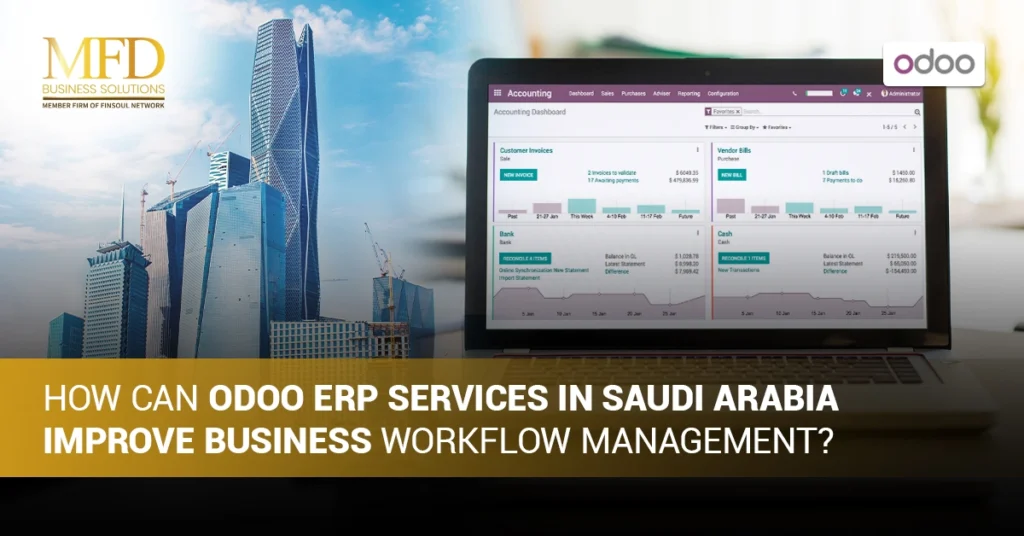
Every Saudi business that juggles spreadsheets, separate systems, and manual tasks knows how quickly chaos can slow growth. Odoo ERP Services in Saudi Arabia unify all core functions like finance, sales, inventory, and HR under one system, so teams stop spending hours fixing errors and chasing outdated reports.
MFD Services delivers these solutions with a focus on local needs, including ZATCA VAT and e‑invoicing compliance. Their experts set up, customize, and support Odoo ERP so your data flows effortlessly across departments and compliance work gets done right. This means smoother operations, less stress, and faster decision‑making for your Saudi business’s future.
What Are Odoo ERP Services and Why Are They Important for Saudi Businesses?
Odoo ERP Services in Saudi Arabia are software solutions that help businesses manage key operations from one place. ERP stands for Enterprise Resource Planning software, and it integrates finance, sales, inventory, HR, and customer data into a single platform. Instead of using separate spreadsheets or disconnected programs, companies get a unified system. This reduces errors, saves time, and gives leaders a clear picture of performance. Saudi businesses facing rapid change or growth benefit greatly from a reliable ERP system that supports all departments. Many organizations in the Kingdom also need to follow strict tax and reporting rules. A strong ERP makes it easier to follow these standards and avoids costly mistakes that happen with manual systems.
What Should Saudi Companies Know About Odoo ERP Services in Saudi Arabia?
When Saudi companies look at Odoo ERP Services in Saudi Arabia, they should know these services often include implementation, customization, training, and ongoing support from certified partners. Partners configure the system to match local languages and formats, including Arabic interfaces and Right‑to‑Left display where needed. They also set up modules to follow Saudi tax laws and reporting requirements. Good providers help connect e‑commerce platforms, payment gateways, and warehouse tools so data flows smoothly across teams. You don’t just install the software, you adapt it to your specific industry and workflows.
What Workflow Challenges Do Saudi Businesses Face Without an ERP?
Without a central system, many companies struggle to keep operations running smoothly and reliably.
- Manual data work and errors: Teams enter information by hand between departments like sales, inventory, and finance. This takes time and increases mistakes that slow reporting and weaken decision accuracy.
- No real‑time view of operations: Leaders have to make decisions based on outdated reports because there’s no shared system showing current stock, sales, or financials. This reduces responsiveness to change.
- Disconnected teams and poor coordination: Departments often work in isolation with no shared data flow. This leads to duplicate efforts, communication gaps, and slower turnaround on tasks.
- Harder compliance and growth barriers: Tasks like VAT or e‑invoicing take longer and are prone to errors without automated processes, and growth becomes harder to manage as workflows remain manual.
How Can Odoo ERP Improve Business Operations and Data Flow?
An ERP system like Odoo brings all key business information under one roof, so sales, stocks, customer data, and accounting update automatically when anything changes. This makes it easier to see what’s happening in the business right now, not just days later. Work gets smoother because tasks can be automated. For instance, when a sale is made, stock levels update automatically, and finance records reflect the sale without re‑entry. Dashboards let managers view trends at a glance and spot issues early. Reports become faster and more accurate, saving staff time and reducing stress.
What Benefits Do Odoo ERP Services in Saudi Arabia Offer for Local Companies?
Saudi businesses enjoy several operational and compliance gains when they adopt Odoo’s ERP platform.
- Stronger compliance with local rules: Odoo can be set up to generate ZATCA‑compliant e‑invoices and handle VAT reporting automatically, reducing delays and risks tied to manual tax work.
- Connected data across departments: Sales, inventory, finance, and HR data are unified into one system. Teams no longer juggle separate tools, so decisions are based on consistent, real‑time numbers.
- Lower costs and scalable growth: Odoo’s modular design lets companies start with essential functions and add more later. This avoids large upfront licensing fees and keeps total costs down compared to traditional ERPs.
- Better user experience and productivity: With Arabic language support and modern dashboards, staff can work more easily, reducing training time and improving adoption across the business.
How Does the Odoo ERP Implementation Process Work Step by Step?
Most businesses follow a structured sequence to make sure their Odoo ERP system near me fits daily work and launches without large disruptions.
Step 1: Discovery and requirements
Consultants meet with key team members to map current workflows, goals, and pain points. This helps decide what needs automation and which modules to include.
Step 2: System design and configuration
Teams choose the right Odoo modules and set up the system structure. Here, the system is configured for your roles, processes, and reporting needs.
Step 3: Data migration and testing
Important records from old systems are cleaned and moved into Odoo. After the data is in place, the system is tested to ensure workflows and reports run correctly.
Step 4: Training and user checks
Employees are trained on real work tasks, and the system is validated with real examples, so people are ready before launch.
Srep 5: Go‑live and support
The ERP goes live with ongoing support available to address issues, refine settings, and help staff adapt to their daily processes.
What Customization and Integration Options Are Available for Saudi Business Needs?
Odoo is flexible and can be adapted to match specific business processes. For example, you can customize inventory rules so that stock automatically reorders at certain levels. Payroll and HR can be set up to match Saudi labor laws, including GOSI and Saudization tracking. Integration options connect your ERP to tools you already use, such as e‑commerce platforms, payment systems, and logistics apps. This keeps data flowing smoothly between systems and eliminates duplicate entries. Dashboards and custom reports can be designed so each team sees only the information they need, improving security and user experience.
How Does Odoo ERP Support Local Compliance Like ZATCA E‑Invoicing and VAT?
Odoo ERP Services in Saudi Arabia include solutions for ZATCA e‑invoicing and VAT calculations, which are critical for Saudi businesses. Odoo systems can generate e‑invoices in the formats required by ZATCA and connect directly with the official Fatoora platform to submit them. This handles both Phase 1 and Phase 2 compliance.
At the same time, VAT and other tax rules are built into accounting modules, automatically calculating correct amounts and preparing reports for submission. Audit trails record changes so your data is ready for any review. This support reduces the risk of penalties and helps businesses meet deadlines without manual effort.
Which Core Odoo Modules Support Better Workflow Management?
Several Odoo modules help improve business workflows. Key modules include:
- Accounting and Invoicing for financial entries, tax reports, and audit trails.
- Sales and CRM to track leads, quotations, and orders.
- Inventory and Purchase to manage stock, suppliers, and warehouses.
- Human Resources for payroll, attendance, and staff records.
- Project, Manufacturing, and e‑commerce for industry‑specific needs.
Each module shares the same central database, so teams always work with consistent information. When an order comes in, it updates stock, finance, and reports without separate entries.
Which Industries in Saudi Arabia Benefit Most from Odoo ERP Solutions?
Many industries in Saudi Arabia gain operational clarity and stronger control when they adopt an integrated ERP like Odoo.
- Retail & e‑commerce: Helps businesses handle sales, stock, customer orders, and point‑of‑sale all from a single system.
- Manufacturing & production: Supports planning, inventory, quality control, and work orders so factories run more efficiently.
- Healthcare: ERP centralizes patient management, billing, appointments, and compliance tasks.
- Construction & services: Tracks projects, budgets, contracts, and supplier activity with greater transparency.
What Typical Timeline and Investment Expectations Should Businesses Plan For?
ERP projects usually take several weeks to months. Small businesses with basic needs may finish implementation in about two to three months. Large firms with many modules and custom requirements can take four to six months or more, depending on complexity. Investment varies based on the number of users, the modules chosen, and the custom workflows. Modular implementation helps control costs because you pay only for the functionality you need right now. Clear planning and milestones help businesses estimate budgets and avoid surprises.
Why Choose MFD Services for Odoo ERP Services in Saudi Arabia?
Choosing Odoo ERP Services in Saudi Arabia from MFD Services gives companies an edge in efficiency and compliance. MFD’s team combines deep local regulatory knowledge with proven ERP expertise to ensure systems fit Saudi business practices and reporting standards, including VAT and e‑invoicing. Their structured process covers planning, configuration, data migration, and ongoing support so your system works smoothly from day one. With transparent pricing and industry‑adapted solutions, MFD helps businesses reduce errors, improve accuracy, and strengthen governance while aligning with national compliance requirements.
Conclusion
Odoo ERP Services in Saudi Arabia help businesses unify operations, speed up reporting, and stay aligned with local rules like ZATCA e‑invoicing and VAT. Partnering with MFD Services adds expert guidance in planning, implementation, and compliance, so systems are adapted to Saudi business needs and regulator expectations. With clearer data, smoother workflows, and stronger operational control, companies in the Kingdom can focus on growth and long‑term success.