
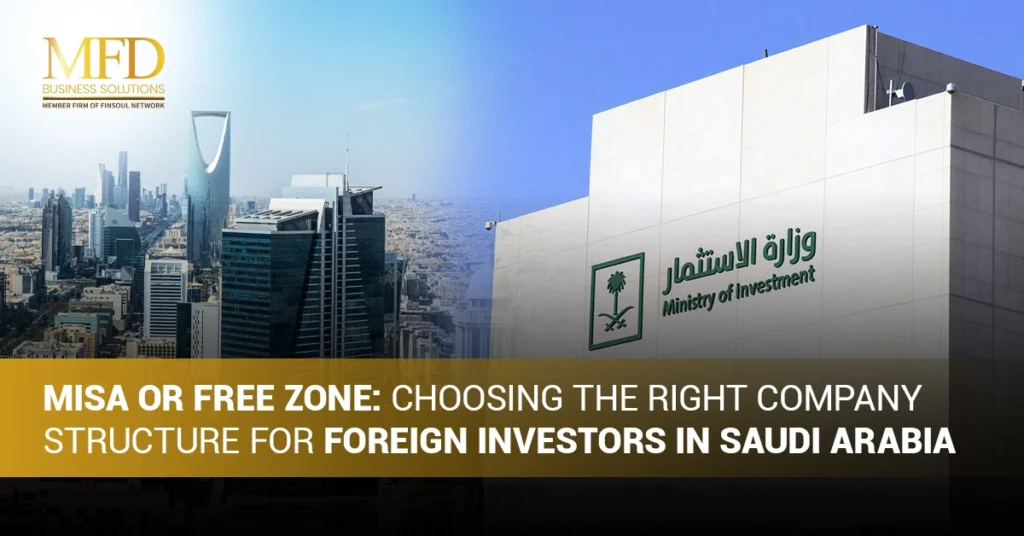
Understanding Foreign Investment Opportunities in Saudi Arabia
Saudi Arabia is rapidly becoming one of the strongest investment destinations for international businesses looking to expand into the Middle East. The Kingdom’s Vision 2030 initiative has opened new opportunities across industries including construction, healthcare, technology, logistics, tourism, manufacturing, and financial services. Foreign investors are now entering Saudi Arabia at a much faster pace because of economic reforms and investor-friendly regulations.
As more global businesses explore expansion into the Saudi market, choosing the right company structure has become a critical business decision. Investors must carefully evaluate whether a MISA mainland structure or a free zone setup aligns better with their long-term operational goals. MFD Services helps businesses understand these structures and establish compliant operations within Saudi Arabia’s evolving investment environment.
Why Saudi Arabia Is Attracting Global Investors
Saudi Arabia’s strategic location and rapidly diversifying economy continue attracting international investors from around the world. Businesses see the Kingdom as a gateway to both GCC and broader Middle Eastern markets. Government-backed mega projects and infrastructure development programs are also creating significant commercial opportunities for foreign companies across multiple industries.
The Saudi government has introduced major reforms designed to improve the ease of doing business and increase foreign investor confidence. These reforms include expanded foreign ownership rights, simplified licensing procedures, and digital transformation initiatives. International businesses are now viewing Saudi Arabia as a long-term investment destination rather than just a regional market opportunity.
What Is a MISA License in Saudi Arabia
A MISA license allows foreign investors to establish mainland companies within Saudi Arabia while operating legally across the Kingdom. The Ministry of Investment Saudi Arabia regulates foreign investment activities and supports international companies entering the local market. Businesses operating under a MISA structure can directly engage with Saudi clients, suppliers, and government entities.
MISA licensing is commonly preferred by companies planning large-scale operations or long-term market expansion inside Saudi Arabia. Businesses in sectors such as consulting, engineering, healthcare, retail, and construction often require unrestricted mainland access. This structure provides operational flexibility and supports stronger integration into the Saudi commercial ecosystem.
Understanding Free Zone Company Structures
Saudi free zones and special economic zones are designed to attract foreign investment in strategic sectors such as logistics, technology, manufacturing, and international trade. These zones offer modern infrastructure and industry-focused business environments that support operational efficiency for global businesses. Investors seeking export-oriented operations often consider free zone structures highly attractive.
Free zones may also provide incentives related to customs procedures and operational processes depending on the selected economic zone. Companies involved in regional distribution, warehousing, or digital industries may benefit from these specialized business environments. However, investors should carefully evaluate whether their operations require direct access to the wider Saudi mainland market.
Mainland Access Creates Greater Market Flexibility
One of the biggest advantages of a MISA structure is unrestricted access to the Saudi mainland market. Businesses can directly operate across different regions of the Kingdom while working with local companies, government organizations, and Saudi consumers. This flexibility is extremely important for companies planning aggressive market expansion strategies.
Businesses operating under a mainland structure can also participate in major development projects linked to Vision 2030 initiatives. Many international companies prefer MISA licensing because it allows them to establish stronger commercial relationships within Saudi Arabia. Long-term scalability and direct market engagement make mainland structures highly valuable for many industries.
Why Do Some Investors Prefer Free Zones
Free zones remain highly attractive for businesses involved in global trade, logistics, manufacturing, and export-focused operations. Investors operating internationally may benefit from specialized infrastructure and simplified operational procedures available within economic zones. These benefits can improve efficiency for companies managing regional or international supply chain operations.
Technology businesses are also increasingly exploring free zone opportunities because certain zones focus heavily on innovation and digital industries. Companies involved in cloud computing, AI, software development, and advanced manufacturing often benefit from modern facilities and technology-driven ecosystems. The ideal choice depends heavily on the company’s business model and operational priorities.
Comparing Operational Costs Between Both Structures
Operational costs can vary significantly depending on whether a business selects a MISA mainland structure or a free zone setup. Mainland businesses may require additional expenses related to office space, municipal registrations, staffing requirements, and broader operational infrastructure. However, these costs often support stronger long-term commercial opportunities inside the Saudi market.
Free zones may initially appear more cost-effective for specific industries because of operational incentives and infrastructure support. Businesses should still evaluate future scalability and operational flexibility rather than focusing only on short-term setup savings. A structure that supports future growth can often generate higher long-term returns despite higher initial costs.
How Company Structure Impacts Banking Operations
Opening a corporate bank account is one of the most important steps for foreign investors establishing operations in Saudi Arabia. Mainland MISA companies generally have smoother integration with local banking systems because they operate directly within the Saudi commercial framework. Banks usually prefer businesses with strong regulatory compliance and clear operational structures.
Free zone companies can also access banking facilities depending on the selected structure and operational activity. Financial institutions evaluate licensing documents, ownership structures, and business activities before approving corporate banking services. Proper documentation and regulatory preparation help businesses avoid delays during the banking setup process.
Workforce Expansion and Hiring Flexibility
Businesses planning significant workforce expansion often prefer mainland company structures because they support broader operational growth across Saudi Arabia. Companies can recruit employees, establish departments, and scale operations more efficiently under a MISA framework. This flexibility is especially important for service-based industries requiring direct interaction with Saudi clients.
Free zone companies may still hire employees and maintain operational teams, but workforce regulations can differ based on the selected economic zone. Investors should understand visa processing, labor regulations, and Saudization requirements before selecting the ideal business structure. Workforce planning plays a major role in long-term operational success.
What Industries Benefit Most from MISA Licensing
Industries that rely heavily on local Saudi market access generally benefit more from MISA licensing structures. Consulting firms, engineering companies, healthcare providers, accounting firms, retailers, and construction businesses often require unrestricted mainland operations to serve clients efficiently throughout Saudi Arabia.
Businesses participating in government contracts or Vision 2030 development projects also typically prefer mainland structures. Direct commercial access creates stronger opportunities for expansion and long-term business growth. Companies seeking permanent operational presence inside Saudi Arabia often view MISA licensing near me as the most practical solution.
Which Businesses Are Better Suited for Free Zones
Export-focused companies and international logistics businesses are among the industries most suited for free zone operations. Businesses involved in warehousing, shipping, regional distribution, and manufacturing often benefit from operational efficiencies provided by specialized economic zones. These structures can simplify cross-border trade activities and supply chain management.
Technology startups and digital businesses may also find free zones attractive because of innovation-focused ecosystems and advanced infrastructure. Certain zones are specifically designed to support AI development, cloud computing services, cybersecurity companies, and advanced manufacturing industries. Investors should align their company structure with their long-term operational strategy.
How Vision 2030 Is Reshaping Business Structures
Vision 2030 continues transforming Saudi Arabia into one of the most dynamic investment environments in the region. Government reforms are encouraging foreign businesses to establish long-term operations within the Kingdom while supporting economic diversification beyond oil-related industries. This transformation is creating strong demand for international expertise and investment.
As Saudi Arabia modernizes its commercial ecosystem, businesses must select company structures that support future scalability and compliance. Investors entering the market today are positioning themselves for long-term opportunities linked to infrastructure development, digital transformation, tourism expansion, and industrial growth across the Kingdom.
Legal Compliance Remains a Critical Factor
Both MISA and free zone companies must comply with Saudi regulations related to taxation, labor laws, licensing procedures, and financial reporting requirements. Businesses that fail to maintain compliance may face operational delays, financial penalties, or licensing complications. Understanding regulatory obligations is essential before starting operations.
MFD Services helps foreign investors navigate these compliance requirements while simplifying the company formation process in Saudi Arabia. Professional advisory support reduces operational risks and helps businesses establish legally compliant structures from the beginning. Proper planning creates a stronger foundation for long-term business stability.
Tax and Financial Planning Considerations
Tax planning is another important factor when selecting a company structure in Saudi Arabia. Certain economic zones may offer financial incentives or customs-related advantages designed to encourage foreign investment in strategic industries. These benefits can improve profitability for export-focused and international businesses.
Mainland businesses operating under MISA structures may not always receive identical incentives, but they benefit from broader market accessibility and operational flexibility. Investors should evaluate total business potential rather than focusing only on tax savings. Long-term revenue opportunities often outweigh short-term financial incentives when building scalable operations.
Why Professional Advisory Support Matters
Foreign investors entering Saudi Arabia often underestimate the complexity of licensing procedures and regulatory requirements. Selecting the wrong company structure can create operational restrictions, compliance challenges, and unnecessary financial costs. Professional advisory support helps businesses avoid these issues while streamlining the setup process.
MFD Services provides strategic guidance to foreign investors looking to establish operations through either MISA licensing or free zone structures. From company formation and accounting support to compliance management and financial advisory, MFD Services helps businesses build scalable and legally compliant operations in Saudi Arabia.
Choosing the Right Structure for Long-Term Success
The decision between a MISA mainland structure and a free zone setup depends entirely on the investor’s operational goals, industry type, and future expansion plans. Businesses focused on local Saudi market penetration generally benefit more from mainland access, while international trade and export-focused operations may find free zones more efficient.
Investors should evaluate scalability, workforce expansion, compliance requirements, and long-term market strategy before finalizing their structure. Saudi Arabia continues creating major opportunities for foreign businesses, and selecting the right setup can significantly impact future growth, profitability, and operational success within the Kingdom.
Conclusion
Saudi Arabia has become one of the most attractive destinations for foreign investment due to Vision 2030 reforms, economic diversification, and increasing global business opportunities. Both MISA and free zone structures provide valuable advantages depending on the business activity, operational priorities, and long-term growth strategy of the investor.
Choosing the right company structure requires careful planning, regulatory understanding, and strategic business evaluation. MFD Services continues helping foreign investors establish compliant, scalable, and growth-focused operations in Saudi Arabia while supporting businesses through every stage of the company formation process.
Note: The above-mentioned services are provided via network firms if not provided directly.