
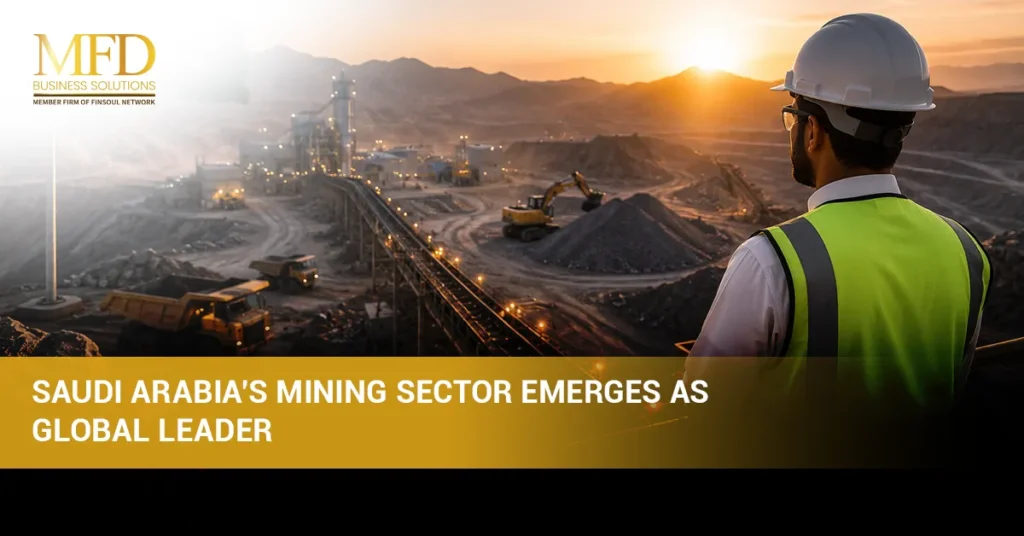
For many years, oil shaped the Kingdom’s economic story. Today, Saudi Arabia is expanding its economic base, with mining playing an increasingly important role in industrial development, investment, and job creation. The Mining Sector Saudi Arabia is attracting attention from local and international companies looking to take part in the Kingdom’s long-term transformation.
At MFD Services, we follow these developments as Saudi Arabia advances Vision 2030 and works to unlock the value of its mineral resources. From exploration and extraction to processing and downstream manufacturing, the sector is creating opportunities for investors, service providers, technology companies, and Saudi talent.
Beyond Oil: The Growth of the Mining Sector Saudi Arabia
The Kingdom is developing its mineral resources to diversify the economy, strengthen domestic supply chains, and support industrial growth. The Ministry of Industry and Mineral Resources (MIM) plays a central role in shaping the sector’s regulatory and investment environment. For businesses assessing the Mining Sector Saudi Arabia, current licensing rules and official guidance are essential starting points.
Key areas of opportunity include:
- Gold: Exploration and development projects continue to create opportunities for mining operators, contractors, equipment suppliers, and supporting services.
- Copper: Demand from construction, electrical infrastructure, manufacturing, and energy projects makes copper an important mineral for future development.
- Phosphate: Saudi phosphate resources support the fertiliser industry and exports, adding value through processing and related industrial activities.
- Bauxite and aluminium: Bauxite supports the Kingdom’s aluminium value chain, from mineral extraction to processing and manufacturing.
- Critical minerals and rare earth elements: These resources are drawing attention because of their potential role in advanced manufacturing, electronics, renewable energy, and electric-vehicle supply chains. Project potential should be assessed against verified geological and commercial data.
- Mining infrastructure: Roads, rail links, ports, power, water systems, and processing facilities are essential to connecting mineral sites with industrial hubs and export routes.
Key Figures and Sector Milestones
The scale of the opportunity is reflected in published estimates and government ambitions. The figures below appeared in the source material and should be checked against current official Saudi sources before publication. For businesses tracking the Mining Sector Saudi Arabia, reliable and up-to-date figures are essential for evaluating investment opportunities.
| Metric | Figure cited in the source material | Context |
| Estimated mineral wealth | SAR 9.375 trillion+ | Estimate of the value of the Kingdom’s mineral resources |
| Mining sector GDP target for 2030 | SAR 281.25 billion | A stated target in the source material; verify the latest official target and methodology |
| New exploration licences (2023–24) | 300+ | Licensing activity reported in the source material |
| Foreign investment pledges | SAR 675 billion+ | Announcements attributed in the source material to Future Minerals Forum events; verify scope and status |
These figures should not be treated as directly comparable: resource valuations, economic targets, licences, and investment announcements measure different things. For a publication aimed at Saudi businesses and investors, use the latest data from the Ministry of Industry and Mineral Resources and other relevant official sources, and clearly distinguish announced commitments from capital actually deployed.
What Is Driving Saudi Mining Investment?
Saudi Mining Investment is supported by several factors, including the Kingdom’s economic diversification agenda, regulatory development, international partnerships, and investment in enabling infrastructure. Government-backed initiatives and investment vehicles, including Manara Minerals, have helped draw attention to opportunities across global mineral supply chains. The annual Future Minerals Forum in Riyadh also brings together government representatives, mining companies, investors, and service providers to discuss projects and industry priorities.
For companies considering the Kingdom, investment decisions should be based on licence requirements, geological data, infrastructure access, financing, local-content obligations, and the relevant environmental and operating approvals. These practical considerations are as important as the sector’s growth outlook.
Together, these developments are helping position Saudi Mining Investment as an area of interest for companies seeking long-term opportunities in exploration, extraction, mineral processing, equipment, engineering, and related services.
International Interest in the Mining Industry Saudi Arabia
International mining companies and suppliers are assessing opportunities across the Mining Industry Saudi Arabia, from exploration and mine development to processing technology and heavy equipment. Interest extends beyond precious metals to industrial minerals and materials that support construction, manufacturing, energy infrastructure, and global supply chains.
The Kingdom’s opportunity lies not only in extracting minerals, but also in developing more of the value chain locally. Partnerships with Saudi companies, workforce development, technology transfer, and downstream processing can help build domestic capability and create skilled employment. Investors should assess each opportunity on its own commercial, regulatory, and geological merits rather than assuming that all minerals or projects carry the same level of readiness.
Challenges the Sector Needs to Address
The outlook for the Mining Sector Saudi Arabia is promising, but sustainable growth depends on addressing several practical challenges:
- Water availability: Mining and mineral processing can require significant water resources, making efficient use, reuse, and suitable supply planning important in arid regions.
- Skills and workforce development: The sector needs qualified Saudi and international specialists across geology, mining engineering, processing, health and safety, and environmental management. Training and knowledge transfer can support national workforce development.
- Commodity-price volatility: Changes in global mineral prices can affect project economics, financing, and investment decisions.
- Infrastructure and logistics: Remote deposits may require reliable road and rail access, power, water, and links to processing facilities and ports.
- Environmental compliance: Operators must plan for responsible resource use, waste and tailings management, site rehabilitation, and compliance with applicable Saudi environmental requirements.
- Long-term project viability: Strong feasibility studies, transparent governance, community engagement, and realistic development schedules help turn exploration potential into durable operations.
How Saudi Arabia Compares with Established Mining Markets
Established mining markets such as Australia and Chile offer mature supply chains, experienced workforces, and long operating histories. Saudi Arabia’s proposition is different: the Kingdom is continuing to develop its mining ecosystem alongside broader industrial and infrastructure investment.
The Mining Sector Saudi Arabia may appeal to businesses seeking growth opportunities in exploration, engineering, equipment, services, and mineral processing. However, the sector is still developing, and project timelines, geology, infrastructure requirements, permitting, and commodity cycles all affect commercial outcomes. Investors should compare opportunities using project-level evidence rather than relying on broad national comparisons alone.
What Mining Growth Means for the Kingdom and the Region
A stronger mining base can support Saudi industrial development, diversify exports, create skilled jobs, and expand opportunities for local suppliers. It can also strengthen links between mineral production and downstream industries, helping more value remain within the Kingdom.
Universities, technical colleges, and training providers can contribute by developing skills in geology, metallurgy, mining engineering, automation, and environmental management. For Saudi businesses, the opportunity may extend beyond mine ownership to maintenance, transport, engineering, digital systems, safety services, and other specialist support. The extent of these benefits will depend on project delivery, workforce development, local supply-chain capacity, and responsible environmental management.
Final Thoughts
The Mining Sector Saudi Arabia is becoming an important part of the Kingdom’s economic diversification agenda under Vision 2030. Mineral development, investment, infrastructure, and industrial partnerships can create opportunities across the mining value chain, while careful project assessment and responsible operations remain essential.
For investors and businesses exploring the Mining Sector Saudi Arabia, the most useful next step is to review current licensing information, official sector announcements, project requirements, and available geological data. MFD Services will continue following developments to help businesses understand emerging opportunities and the practical considerations involved in entering the Saudi market.
Frequently Asked Questions
Why is Saudi Arabia investing in mining?
Mining supports the Kingdom’s economic diversification goals under Vision 2030. Developing mineral resources can contribute to industrial growth, export diversification, local supply chains, and skilled employment.
Which minerals are important to Saudi Arabia’s mining plans?
Gold, copper, phosphate, and bauxite are among the resources discussed in the sector. Opportunities involving critical minerals and rare earth elements should be assessed using current official geological information and project-specific evidence.
Can international companies invest in Saudi mining?
International companies may be able to participate, subject to the applicable licensing framework, investment requirements, and other relevant Saudi laws and approvals. Businesses should consult current guidance from the Ministry of Industry and Mineral Resources and qualified local advisers before proceeding.
What is the role of the Future Minerals Forum?
Held in Riyadh, the Future Minerals Forum convenes public- and private-sector participants to discuss mineral supply chains, investment, technology, and the future development of the mining industry.
What are the main challenges for the sector?
Key considerations include water availability, specialised skills, commodity-price volatility, infrastructure, environmental compliance, and the commercial viability of individual projects.
What opportunities exist for local suppliers?
Opportunities may include transport, engineering, equipment and maintenance, environmental services, digital technologies, workforce training, and support for mineral processing. Requirements and opportunities vary by project and procurement process.