
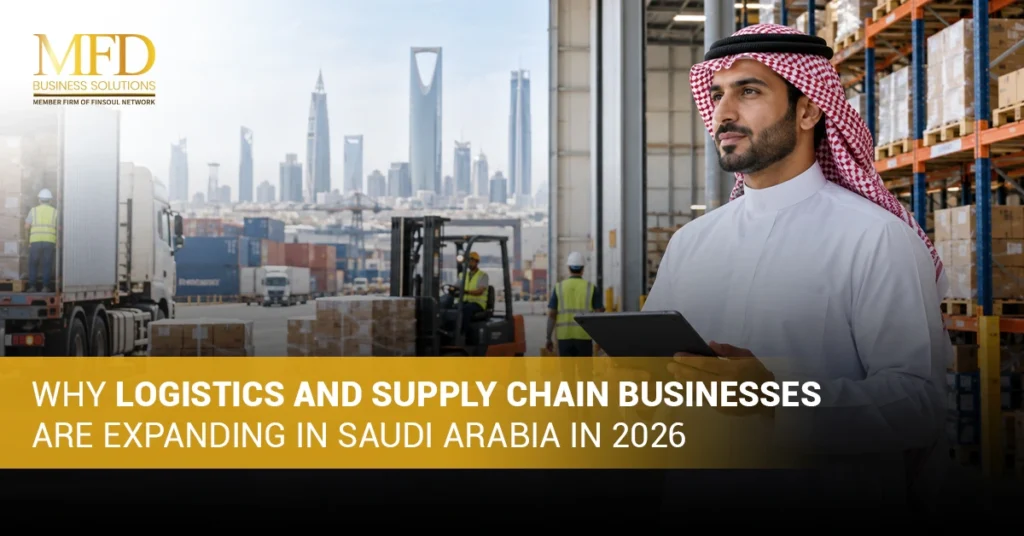
Saudi Arabia is seeing more business activity across manufacturing, e-commerce, construction, tourism, and international trade. As these industries grow, companies need better ways to move, store, manage, and deliver goods. This is creating new demand for transport companies, warehouses, fulfilment providers, freight forwarders, and other supply chain services. In 2026, logistics investment in Saudi Arabia is attracting attention because the demand is coming from several parts of the economy rather than one industry. Businesses are also looking beyond basic transportation and considering services that can support their operations at different stages.
MFD Services helps businesses understand the requirements involved in setting up and operating in Saudi Arabia. A logistics business needs more than a suitable location and transport facilities. Companies should study their activity, customers, licensing requirements, costs, workforce needs, and long-term plans before entering the market. Understanding these areas can help businesses assess if logistics investment in Saudi Arabia fits their commercial goals.
Saudi Arabia Is Moving From a Transport Market to a Full Supply Chain Market
Saudi Arabia’s logistics market is becoming broader than traditional transportation. Businesses now need support across storage, inventory, distribution, fulfilment, freight forwarding, and delivery. A manufacturer may need raw materials moved to its facility, products stored after production, and finished goods delivered to customers. An online retailer may need warehousing, order processing, packing, delivery, tracking, and returns.
This wider demand is changing the type of services businesses are looking for. Companies can choose specialist providers for individual tasks or use third-party logistics providers for several activities. Technology is also becoming more common in warehouse management, fleet tracking, shipment updates, and inventory control. As more industries expand, logistics businesses can serve a wider customer base. This makes the market relevant to both established operators and companies planning new services.
How Industrial Growth Is Creating New Logistics Demand
Industrial development is increasing the movement of materials, equipment, components, and finished products across Saudi Arabia. Each stage of production creates a need for transportation and storage.
- Manufacturing: Factories need regular deliveries of raw materials, components, packaging, and machinery.
- Mining: Mining operations require equipment, supplies, and transportation for extracted materials.
- Food production: Food businesses need storage and distribution, including temperature-controlled services for selected products.
- Pharmaceuticals: Healthcare products may require controlled storage and reliable transportation.
- Construction materials: Large developments create demand for moving steel, cement, equipment, fixtures, and other materials.
This growth can support logistics providers that understand industrial customers and their delivery schedules. It can also create longer-term demand for warehouse space, fleet services, freight handling, and inventory management. Businesses that serve specific industries may find opportunities by building services around the needs of those customers.
E-Commerce Is Changing What Saudi Customers Expect From Logistics
Online shopping has changed how customers think about delivery. People now expect products to arrive quickly, orders to be easy to track, and returns to be handled without unnecessary delays. Retailers therefore need logistics systems that can manage orders from the warehouse to the customer’s doorstep.
Why E-Commerce Is Creating More Logistics Demand
- Fulfilment centers: Online retailers need storage and order-processing facilities close to their main markets.
- Faster delivery: Shorter delivery times require well-planned local distribution networks.
- Last-mile delivery: Individual customer orders need reliable delivery services.
- Returns: Online shopping creates additional movement when customers return or exchange products.
- Tracking: Retailers need shipment information that can be shared with customers.
The result is demand for businesses that can provide warehousing, fulfilment, delivery, returns handling, and related technology. Business Process Automation Services can help logistics businesses manage digital workflows, reduce manual tasks, and improve the way different operational processes are handled. We can also help companies reviewing logistics investment in Saudi Arabia understand the business setup considerations linked to their planned activity.
Mega Projects Are Creating a Different Type of Logistics Demand
Saudi Arabia’s large development projects create logistics requirements that differ from regular retail deliveries. Construction sites and major developments may need heavy equipment, building materials, imported products, and specialised cargo delivered according to strict project schedules.
- Construction logistics: Materials need to reach sites according to project timelines.
- Project cargo: Oversized or specialised goods may need special handling and transport.
- Tourism projects: Hotels, resorts, restaurants, and entertainment facilities need regular supplies.
- Infrastructure work: Transport facilities, utilities, roads, and other projects require ongoing material movement.
- Site deliveries: Large projects may need temporary storage and controlled delivery to different areas.
These needs can create work for freight forwarders, project logistics providers, warehouse operators, and specialised transport companies. Unlike regular consumer deliveries, project logistics often requires detailed scheduling and coordination between suppliers, transport providers, and construction teams.
Why Saudi Arabia’s Location Matters More in 2026
Saudi Arabia connects major markets across Asia, Europe, Africa, and the Gulf region. Its access to the Red Sea and Arabian Gulf gives businesses different options for international cargo movement. Road networks and other transport links then help move goods into domestic markets and selected regional destinations.
This position is useful for companies that want to build distribution operations serving Saudi customers while also reaching nearby markets. Changes in international shipping routes during 2026 have also increased attention on alternative routes and regional distribution. For businesses considering logistics investment in Saudi Arabia, location can affect transport costs, delivery times, access to customers, warehouse requirements, and the type of service they can provide. A location should therefore be selected based on the company’s customers and expected cargo movements.
How Ports, Rail, Roads and Logistics Zones Are Changing Business Operations
Saudi Arabia’s transport infrastructure is supporting the movement of goods across different parts of the country. New and improved facilities can give businesses more options for importing, storing, moving, and distributing products.
- Ports: Seaports support container handling, imports, exports, and international cargo movement.
- Rail: Rail connections can support freight movement between selected industrial and commercial areas.
- Roads: Road transport remains important for domestic distribution and deliveries.
- Logistics centers: These facilities provide space for storage, distribution, and related services.
- Economic zones: Special locations can support businesses involved in manufacturing, trade, storage, and distribution.
The impact goes beyond transportation. Better connections can support new warehouses, distribution centers, freight services, and specialised logistics facilities. Companies can compare locations based on customer demand, cargo type, transport access, available facilities, and operating costs.
The 2026 Trade Environment Is Changing Supply Chain Planning
International trade conditions can affect delivery schedules, transportation costs, and inventory levels. Businesses operating across borders are paying more attention to how changes in shipping routes can affect their supply chains.
- Alternative routes: Companies may need other shipping options when regular routes face delays.
- Inventory planning: Businesses may hold suitable stock levels to reduce the effect of unexpected delays.
- Regional storage: Warehouses closer to customers can reduce long-distance delivery times.
- Multiple transport modes: Sea, road, rail, and air can be used according to cargo and delivery requirements.
- Supplier planning: Companies may consider different suppliers and routes to reduce dependence on one source.
These conditions can increase demand for logistics providers that give businesses flexible storage, transport, and distribution options. They also show why supply chain planning needs to be considered alongside wider business planning.
Bigger Logistics Business Opportunities in Saudi Arabia
Growth across different industries is creating demand for several types of logistics services. The opportunity is not limited to companies that operate trucks or manage freight.
| Business area | Main source of demand |
| 3PL services | Companies outsourcing logistics activities |
| Warehousing | Growing inventory and distribution needs |
| E-commerce fulfilment | Online order processing and delivery |
| Cold-chain logistics | Food, healthcare, and temperature-sensitive goods |
| Freight forwarding | Import and export activity |
These logistics opportunities Saudi Arabia has to offer can suit businesses with different operating models. The right choice depends on the target customer, available capital, location, service requirements, and applicable regulations. Financial Advisory Services can help businesses review investment requirements, financial considerations, operating costs, and the financial side of their planned logistics activity before making major commitments. Our team can support businesses as they assess their proposed logistics plans and prepare for market entry.
Which Saudi Regions Make Sense for Different Logistics Businesses?
The best location depends on what a logistics company does and who it serves. A national distributor may have different needs from a company serving factories or port-based customers.
- Riyadh: Suitable for businesses focused on national distribution, retail, e-commerce, and corporate customers.
- Jeddah: Port access and a large consumer market can support maritime trade and Western Saudi Arabia distribution.
- Eastern Province: Industrial, energy, manufacturing, and Gulf-related activity can create demand for specialised logistics services.
- Industrial and economic zones: These locations can suit companies serving manufacturers, exporters, and businesses operating in dedicated commercial areas.
- Major development areas: Large projects can create demand for project logistics, equipment transport, storage, and site deliveries.
Companies should compare customer locations, transport routes, warehouse costs, workforce needs, and expected shipment volumes before selecting a base.
Why Are 3PL and Warehousing Becoming More Attractive?
Many companies do not want to build and manage every part of their logistics operation internally. A third-party logistics provider can handle activities such as storage, order processing, transportation, inventory management, and distribution. This can be useful for businesses entering Saudi Arabia or expanding into new cities. Warehousing is also becoming more important as companies need stock closer to customers, factories, and distribution points.
E-commerce businesses require fulfilment space, while manufacturers need storage for raw materials and finished products. Food and healthcare companies may need specialised facilities for certain goods. These different requirements create several customer groups for logistics businesses. MFD Services supports companies assessing logistics investment in Saudi Arabia and the requirements that may apply to their proposed business activity.
Which Businesses Are Most Likely to Need Logistics Services?
Demand can come from businesses at different stages of growth and across several industries.
- Manufacturers needing regular inbound and outbound movement
- E-commerce companies requiring fulfilment and delivery
- Retailers managing inventory across multiple locations
- International businesses entering the Saudi market
- Food and healthcare companies needing specialised storage or transport
A company should identify its target customers before deciding on its logistics model. A provider serving manufacturers may need larger storage areas and scheduled transport, while an e-commerce provider may focus more on fulfilment speed and last-mile delivery.
How Can Foreign Companies Assess Logistics Opportunities in Saudi Arabia?
Foreign companies should study the market before committing to facilities, vehicles, employees, or technology.
Step 1: Define the Business Activity
Decide whether the company will focus on transportation, warehousing, freight forwarding, fulfilment, 3PL, cold chain, or another service.
Step 2: Identify Target Customers
Study the industries most likely to use the service. Customer requirements will affect pricing, location, staffing, equipment, and capacity.
Step 3: Select the Location
Compare Riyadh, Jeddah, the Eastern Province, and suitable industrial or economic zones based on customers and cargo routes.
Step 4: Review Licensing Requirements
Check the registrations, licenses, approvals, and activity-specific requirements that apply to the proposed business.
Step 5: Calculate Operating Costs
Prepare estimates for warehouse rent, vehicles, equipment, employees, technology, insurance, maintenance, utilities, and other expenses.
Step 6: Prepare the Market Entry Plan
Decide whether to establish direct operations, work with a local partner, or start with a smaller service model before expanding.
For this blog, I’d add a topic-specific Why Choose MFD section before the conclusion:
Why Logistics Businesses Choose MFD Services for Saudi Market Entry?
MFD Services helps logistics and supply chain businesses understand the practical requirements of entering and operating in Saudi Arabia. Our team can support companies as they review their planned business activity, market-entry approach, financial needs, and operational processes.
This can be useful for transport companies, warehouse operators, 3PL providers, fulfilment businesses, and freight forwarders planning to expand into the Kingdom. We focus on the requirements that can affect a business before it commits to facilities, employees, technology, or other major costs. Businesses can work with our team to build a clearer market-entry plan based on their commercial goals and planned logistics activities.
Conclusion
Saudi Arabia’s logistics growth in 2026 is being supported by changes across several parts of the economy. Industrial expansion is creating demand for material movement and storage, while e-commerce is increasing fulfilment and delivery requirements. Large development projects are also creating demand for specialised logistics services. Ports, roads, rail connections, and logistics facilities are giving businesses more options for moving goods.
The market is therefore relevant to transport providers, warehouse operators, 3PL companies, fulfilment businesses, freight forwarders, and specialised service providers. Companies planning to enter the market should study their target customers, location, service model, costs, and regulatory requirements before starting operations. MFD Services helps businesses assess the Saudi market and plan their entry based on their business activity and operational needs.
FAQs
Why are logistics businesses expanding in Saudi Arabia in 2026?
Saudi Arabia’s industrial growth, e-commerce activity, major projects, and international trade are increasing demand for transport, warehousing, fulfilment, and supply chain services.
What are the main logistics opportunities in Saudi Arabia?
Key opportunities include 3PL services, warehousing, e-commerce fulfilment, freight forwarding, cold-chain logistics, last-mile delivery, and specialised project logistics.
How is e-commerce affecting logistics in Saudi Arabia?
Growing online orders are increasing demand for fulfilment centers, inventory storage, faster last-mile delivery, shipment tracking, and returns management.
Which Saudi cities are suitable for logistics businesses?
Riyadh suits national distribution and e-commerce, while Jeddah supports port-related trade and the Eastern Province has strong industrial and energy-related logistics demand.
What should foreign companies consider before entering Saudi Arabia’s logistics market?
Foreign companies should assess their business activity, target customers, location, licensing requirements, operating costs, workforce needs, and suitable market-entry model.